
ShaderGradient
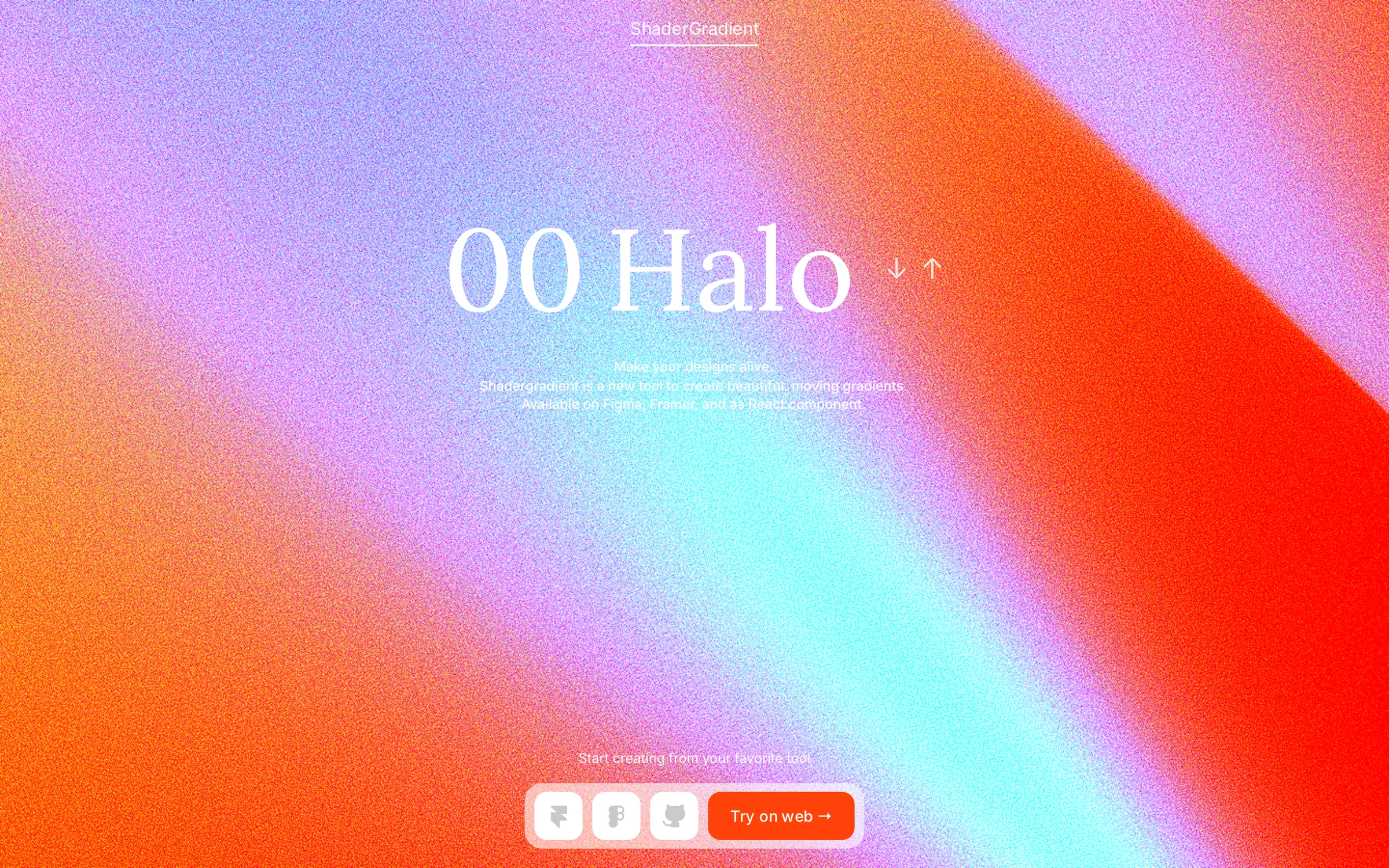
Design moving 3D gradients in the browser and use them in Framer, Figma or React, or export them as images.
At a glance
Checked
- Pricing
- Free: the web editor opens without an account, and the React and Vue packages are MIT licensed
- Licence
- MIT, open source
- GitHub
- github.com/ruucm/shadergradient3.2k stars · 195 forks · written in TypeScriptFrom GitHub, updated at every build
- Made by
- Ruucm and Seungmee
- Platforms
- In the browser, as Figma and Framer plugins, and as React and Vue packages
- Website
- shadergradient.co
What it’s good for
ShaderGradient renders gradients as moving 3D surfaces rather than flat fills. In the web editor you pick a shape and three colours, then tune noise strength and density, spiral, speed, grain, lighting, position and rotation, and every setting is kept in the page address, so sharing the link reproduces the exact look. The same gradient can go onto a Figma canvas through the plugin, into a Framer site through its plugin or remix, or into a React or Vue app with the npm packages.
A creative developer, Ruucm, and a creative designer, Seungmee, made it. The code is on GitHub under the MIT licence, and version 2 of the React package ships only the renderer, so you bring your own controls or state.
Alternatives to ShaderGradient
All Backgrounds tools
Neat
Another generator for animated 3D gradient backgrounds, with presets and export to code, PNG or video.
Backgrounds

Mesh Gradient
Flat mesh gradients made by moving colour points in the browser and saved as still images.
Backgrounds

Mesher
Builds soft multi colour mesh gradients and copies them as pure CSS.
Backgrounds
Questions
- Is ShaderGradient free?
- The web editor opens without an account, and the React and Vue packages are open source under the MIT licence. The site lists no paid plan.
- Can I use ShaderGradient in React?
- Yes. Install the @shadergradient/react package with @react-three/fiber and three, then place ShaderGradient inside ShaderGradientCanvas. It works with React 18 or 19.