
Ionic
Open source UI toolkit of over 100 mobile components for building iOS, Android and web apps with Angular, React, Vue or plain JavaScript.
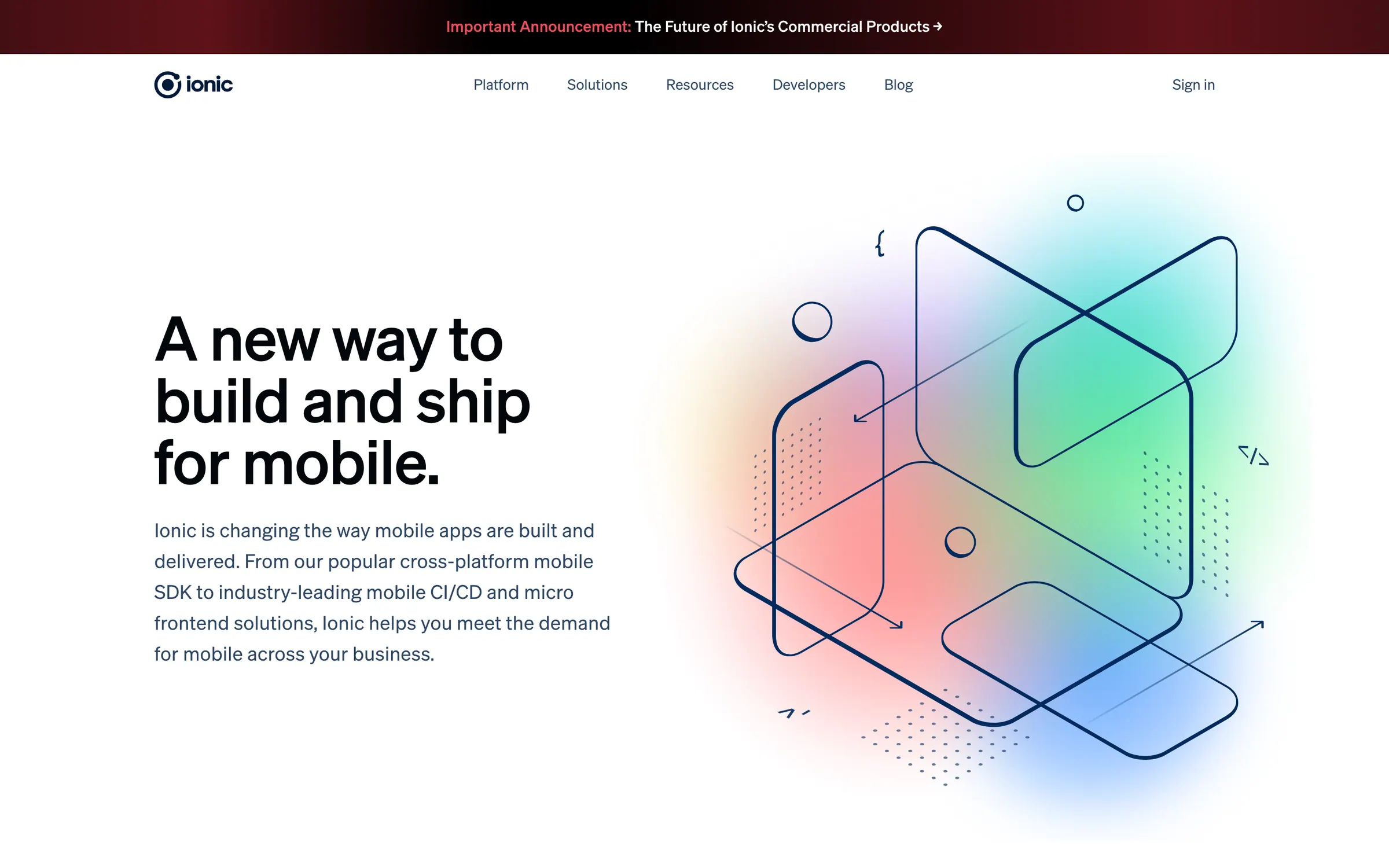
At a glance
Checked
- Pricing
- Ionic Framework and Capacitor: free and open source
- Appflow, Portals, Identity Vault and the other commercial products: no longer sold to new customers since 11 February 2025
- Licence
- MIT, open source
- GitHub
- github.com/ionic-team/ionic-framework52.8k stars · 13.3k forks · written in TypeScriptLatest release v9.0.13, 20 Nov 2026From GitHub, updated at every build
- Made by
- Ionic, an OutSystems company
- Platforms
- iOS, Android and the web, with Angular, React, Vue or plain JavaScript
- Website
- ionicframework.com
What it’s good for
Ionic Framework is a toolkit of more than 100 UI components for mobile interfaces, used from Angular, React, Vue or with no framework at all. Paired with Capacitor, its native runtime, the same code is packaged for the iOS and Android app stores and reaches device features such as the camera, filesystem and sharing through plugins, and it still runs in a web browser.
It is meant for web developers who already know HTML, CSS and JavaScript and need an app on phones. In February 2025 Ionic, now part of OutSystems, stopped selling its commercial products such as Appflow and Portals to new customers and began winding down their support. The framework and Capacitor were left out of that change and stay free, with Ionic Framework under the MIT licence.
Alternatives to Ionic
All Frontend Design tools

Questions
- Is Ionic free?
- Yes. Ionic Framework is open source under the MIT licence, and Capacitor is free and open source as well. The paid products such as Appflow are no longer sold to new customers.
- Is Ionic being discontinued?
- Only its commercial side. Since February 2025 there are no new sales of Appflow, Portals, Identity Vault and the other paid products, and existing Appflow customers keep access until 31 December 2027. Ionic Framework and Capacitor continue as open source projects.