
Sass
Stylesheet language that adds variables, nesting, partials, modules and mixins to CSS and compiles to plain CSS, in SCSS or the indented syntax.
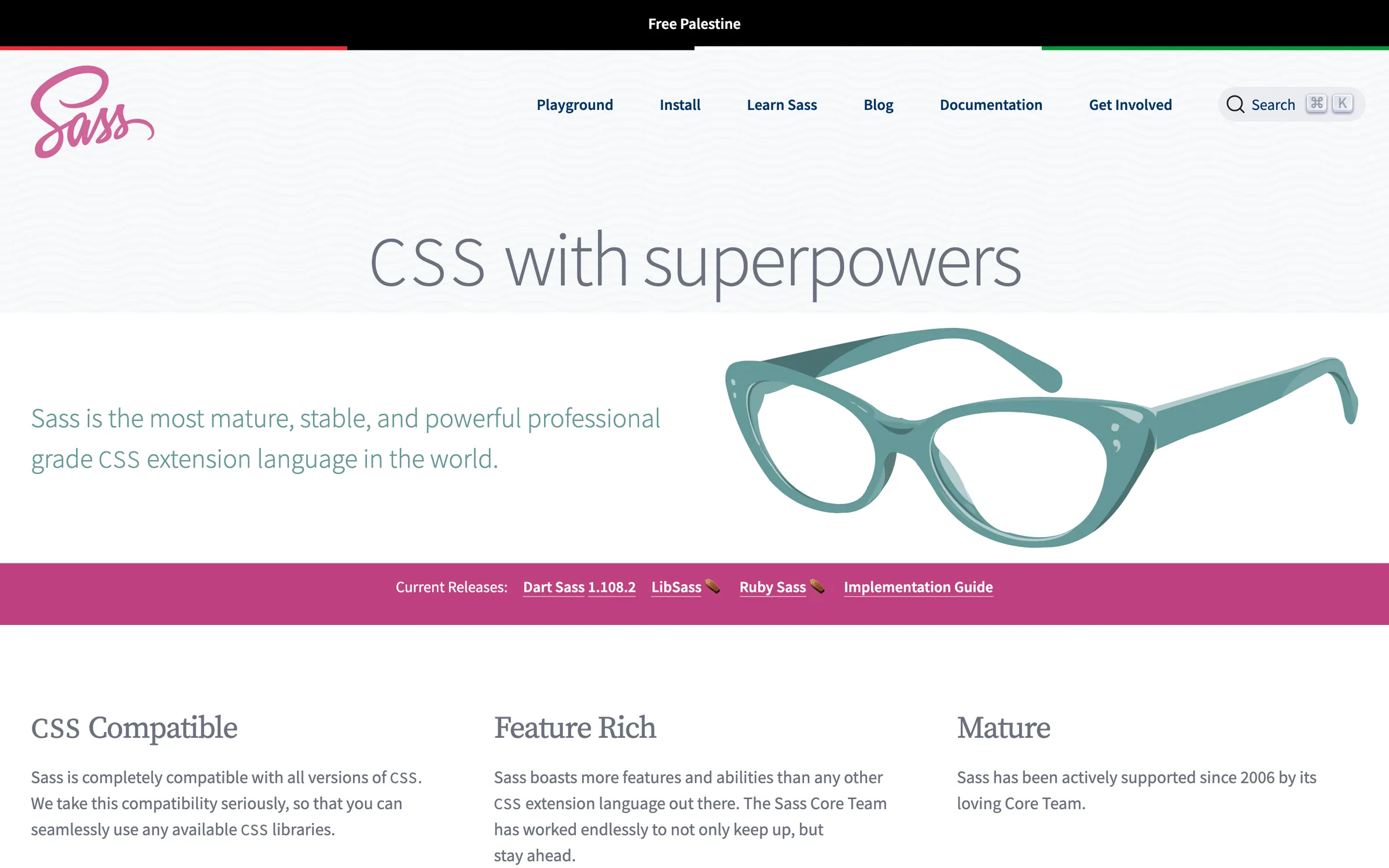
At a glance
Checked
- Pricing
- Free: Dart Sass and every release, MIT licensed
- Licence
- MIT, open source
- GitHub
- github.com/sass/dart-sass4.2k stars · 410 forks · written in DartLatest release 1.108.2, 11 Nov 2026From GitHub, updated at every build
- Made by
- The Sass team
- Platforms
- Windows, macOS and Linux, through npm, Homebrew, Chocolatey or a standalone download
- Website
- sass-lang.com
What it’s good for
Sass extends CSS with variables, nesting, partials, modules, mixins, inheritance through extend, and operators, then compiles all of it to ordinary CSS. Most projects write it in the SCSS syntax, which reads like CSS with braces; the older indented syntax drops the braces and nests rules by indentation.
It earns its place in large stylesheets and in design systems that keep colour, type and spacing scales in one file. Dart Sass is the implementation listed under current releases, at version 1.108.2 when checked. Install it from npm, Homebrew or Chocolatey, or download a standalone build for Windows, Mac or Linux. Two paid desktop apps, CodeKit and Prepros, can compile it for you if you would rather avoid the command line. Sass itself is free under the MIT licence.
Alternatives to Sass
All Frontend Design tools

Questions
- Is Sass free?
- Yes. Sass is open source under the MIT licence, and Dart Sass installs from npm, Homebrew or Chocolatey at no cost.
- What is the difference between SCSS and Sass syntax?
- Both are Sass. SCSS files end in .scss, use the curly braces of CSS and are the more common choice. The indented syntax, in .sass files, nests rules by indentation instead of braces.