
Parcel
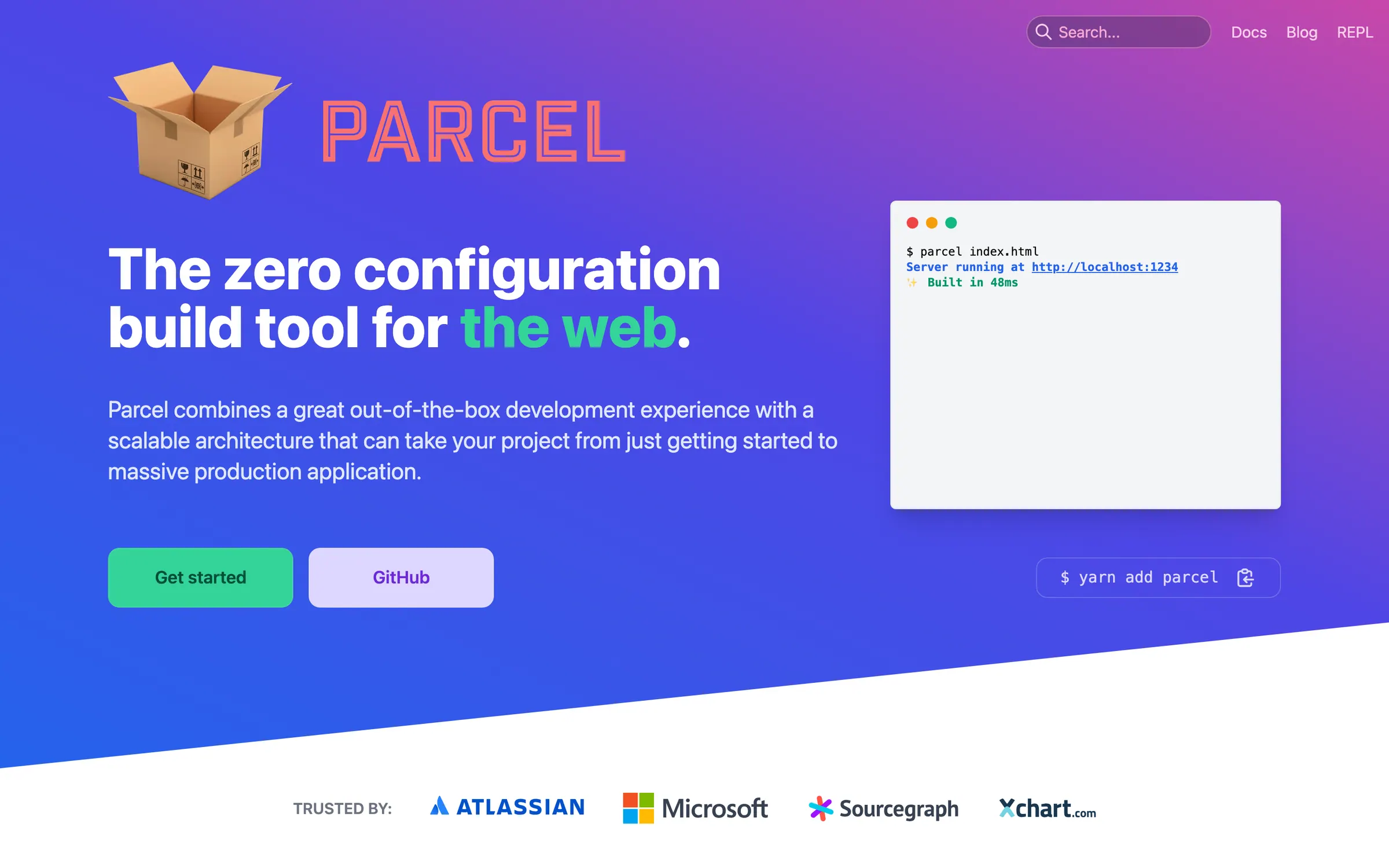
Zero configuration build tool for the web that bundles HTML, CSS, JavaScript and TypeScript, with a dev server, hot reloading and Rust compilers.
At a glance
Checked
- Pricing
- Free: the full build tool, MIT licensed and funded by sponsors
- Licence
- MIT, open source
- GitHub
- github.com/parcel-bundler/parcel44k stars · 2.3k forks · written in RustLatest release v2.16.4, 2 Feb 2026From GitHub, updated at every build
- Made by
- Devon Govett and Parcel contributors
- Platforms
- A command line tool for Node.js projects, installed with npm or Yarn
- Website
- parceljs.org
What it’s good for
Parcel builds web apps and libraries without a config file. Point it at an HTML file and it follows the scripts, styles and images it links, compiling TypeScript, JSX, Sass and other formats, and installs any plugin it needs for a file type it does not handle by default. The dev server adds HTTPS with a generated certificate, an API proxy and hot reloading that keeps React and Vue state.
For production it tree shakes ES modules and CommonJS, minifies JavaScript, CSS and HTML, resizes images, hashes file names and splits shared code into separate bundles. The JavaScript compiler is built on SWC and the CSS transformer on the parser Firefox uses, both written in Rust, and work is spread across every CPU core with all of it cached. It is MIT licensed, at 2.16.4 when checked.
Alternatives to Parcel
All Frontend Design tools

Questions
- Does Parcel need a config file?
- No. Parcel works from your HTML or package.json entry without configuration. A .parcelrc file is there when you want to add or swap plugins, and an existing .babelrc or .postcssrc is picked up automatically.
- Can Parcel build a library?
- Yes. Add source, main, module and types fields to package.json and Parcel builds each target. It can also build every package in a monorepo with a single parcel build command.